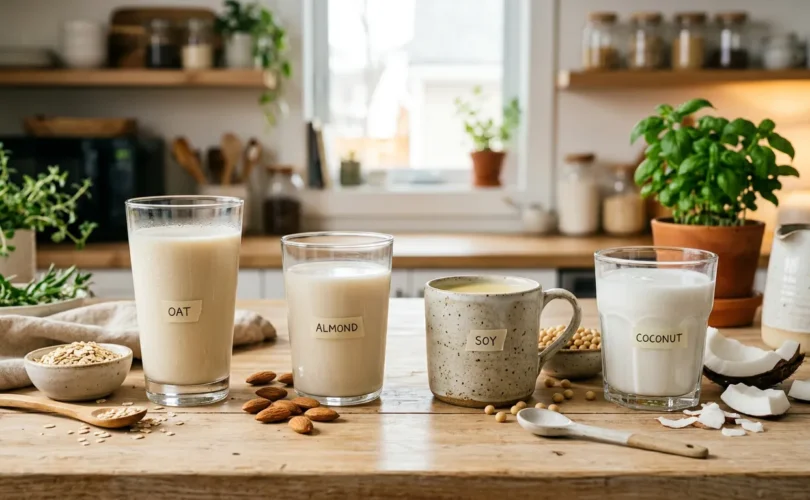
Plant-based milk has become a common ingredient in kitchens and cafés, offering alternatives to traditional dairy milk for drinks, desserts and cooking. Oat, almond, soy and coconut are among the most widely used options, but each has its own taste and texture.
Choosing between them can be useful when preparing a latte or another warm beverage at home. The right option depends on the flavor, consistency and type of drink you want to create.
What is plant-based milk?
Plant-based milk refers to beverages made from plant ingredients rather than dairy. Depending on the variety, the main ingredient can be oats, almonds, soybeans, coconut or other plants.
These beverages are available in different versions, including unsweetened and flavored options. Their nutritional composition can also vary considerably, so checking the label is useful when choosing a product for regular use.
For drinks, texture matters almost as much as taste. Some varieties create a naturally creamy result, while others produce a lighter beverage.
Oat milk
Oat milk has a mild flavor and relatively creamy texture, making it a popular choice for hot drinks.
Its subtle taste allows it to work with coffee, tea and flavored latte recipes without overpowering other ingredients. It can also create a smooth texture when heated and combined with ingredients such as matcha or spices.
For anyone looking for a versatile plant-based option, oat milk is easy to incorporate into different drinks.
Almond milk
Almond milk has a light texture and a recognizable nutty flavor. It can work particularly well in drinks where a subtle almond note complements the other ingredients.
Unsweetened almond milk is useful for recipes where you want greater control over the sweetness. It can also be combined with cinnamon, vanilla or cocoa.
Because it tends to be lighter than some other plant-based beverages, the final texture of a latte may be less creamy.
Soy milk
Soy milk is made from soybeans and has a more pronounced taste than some other plant-based options. It is commonly used in hot beverages and can create a relatively rich texture.
Its neutral-to-mild flavor makes it suitable for both tea-based and coffee-based drinks. It can also be used in homemade latte recipes featuring spices or other flavorful ingredients.
As with other plant-based beverages, checking the nutritional label can help when comparing different products.
Coconut milk
Coconut milk brings a naturally tropical flavor to drinks. Depending on the product, its texture can range from light and drinkable to noticeably rich and creamy.
It works well with ingredients such as vanilla, cinnamon, cocoa and certain fruit-based flavors. Coconut milk can also give a familiar latte recipe a completely different character.
For a lighter result, coconut-based beverages can be combined with another plant-based milk.
Which plant-based milk works best for lattes?
There is no single choice that works for every recipe. Oat milk is useful when a creamy and mild base is wanted, while almond milk offers a lighter texture with a nutty flavor.
Soy milk can provide a fuller texture, and coconut milk is particularly suitable when a tropical note fits the recipe.
The choice can also depend on the main ingredient. For example, a delicate tea-based latte may benefit from a mild milk, while a spiced drink can accommodate a more distinctive flavor.
Pairing plant-based milk with different lattes
Once you have chosen a milk, there are many ways to experiment with latte recipes. Matcha can be paired with oat or almond milk, while chai works well with several varieties.
Golden latte can take on a richer character with coconut milk, while an ube latte can be prepared with different milks depending on the preferred sweetness and creaminess.
If you want to compare different coffee-free options, our guide to latte alternatives looks at several drinks that can be prepared at home.
Check the label before choosing
Not all plant-based milks are identical. Products can differ in sweetness, added ingredients, fortification and nutritional composition.
Reading the ingredient list and nutrition information is therefore useful, especially when choosing a product for frequent use. An unsweetened version may be preferable when the recipe already contains naturally sweet ingredients or an additional sweetener.
Ultimately, the best plant-based milk is the one that fits both the recipe and your personal preferences.